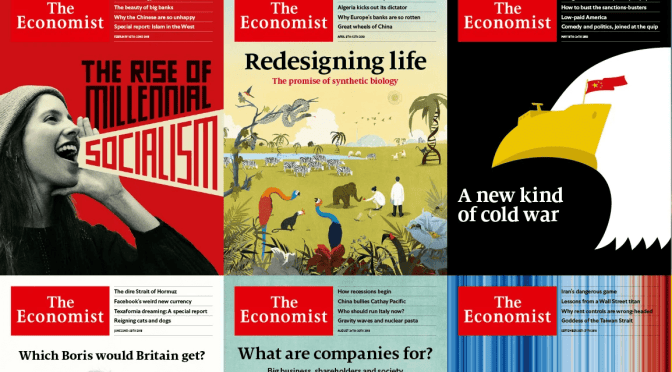
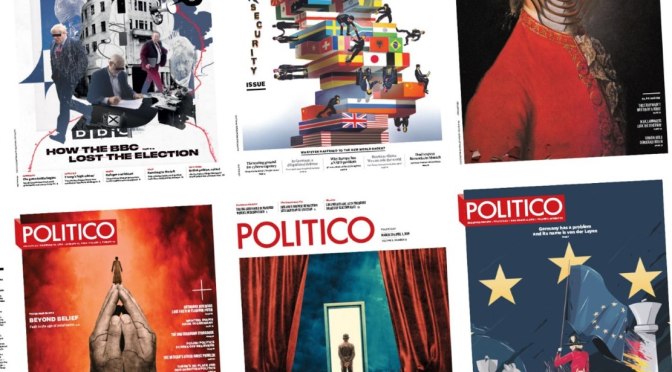
POLITICO MAGAZINE – SEPTEMBER 28, 2026

POLITICO MAGAZINE: The latest issue features ‘Serving At His Pleasure’ – What its really like to serve in Trump’s Cabinet.

Serving at His Pleasure

What it’s like to be in Donald Trump’s Cabinet. By Myah Ward, Diana Nerozzi, Sophia Cai, Daniel Lippman and Marcia Brown

Trump’s economy polls terribly. It’s also surging.

Consumer sentiment is sagging, yet the economy is powering forward, driven by an AI investment boom and people still spending despite the strain of higher prices.

Poll: Trump’s MAGA loyalists don’t think he has an affordability problem

A recent POLITICO Poll found that cost of living concerns are reinforcing partisanship divides — and driving a wedge among Republicans.

Russia Said These Foreigners Wouldn’t Have to Fight. Then It Sent Them to the Frontlines.

One wounded Peruvian escaped and made his way home.

THE CHRONICLE OF HIGHER EDUCATION – OCTOBER 2026

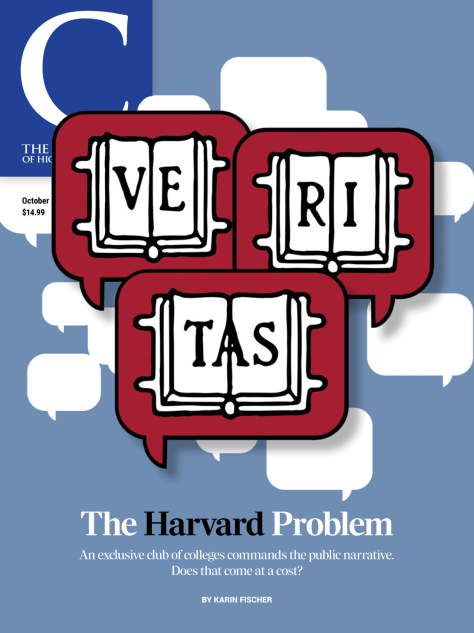
THE CHRONICLE OF HIGHER EDUCATION: The latest issue features ‘The Harvard Problem’ – An exclusive club of colleges commands the public narrative. Does that come at a cost?

Higher Ed’s Harvard Problem

An exclusive club of colleges commands the public narrative. Does that come at a cost? By Karin Fischer

The Face-Time Ultimatum

When faculty are required to be on campus, even to teach online, they may just quit. By Adrienne Lu

Colleges Need Students. They’re Trying to Find Them in Texas.

The Lone Star State is teeming with students — and with college recruiters fighting to win them over. By Taylor Swaak

Neil Gross Knows What Broke College

How political polarization became the organizing logic of academic life. By Evan Goldstein, Len Gutkin

THE LAST CONCIERGE MAGAZINE – AUTUMN 2026

THE LAST CONCIERGE MAGAZINE: This issue features cocktail bars with panoramic views and Jane Austen–inspired Regency stays across England, alongside beauty features exploring artisanal scent discovery and British vineyard vinotherapy treatments.

The Jane Austen-Inspired Stays Bringing Regency Britain to Life

With Sense and Sensibility returning to cinemas this month and ‘set-jetting’ on the rise, Britain’s grand Georgian houses are ready for their close-up. From a London townhouse once owned by Jane Austen’s brother to sweeping country estates in Bath, Somerset and Devon, these are the historic stays that bring Austen’s world vividly to life.

Italy’s UNESCO Train Journey: 8 World Heritage Sites Between Turin and Trieste

Travel from Turin to Trieste on one of Europe’s most remarkable rail journeys, passing eight UNESCO World Heritage Sites across northern Italy in just over five hours.

Where to Stay in Zadar: Falkensteiner’s Dalmatian Coast Resorts

From five-star camping and boutique Adriatic retreats to luxury spa resorts on Punta Skala, here’s where to stay in Zadar and discover Croatia’s spectacular Dalmatian Coast.

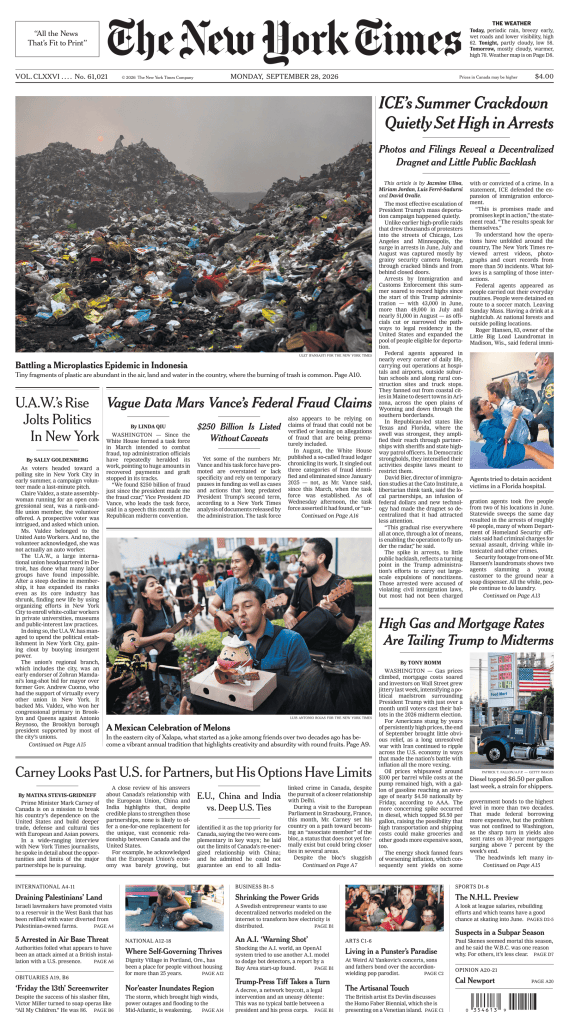
THE NEW YORK TIMES – MONDAY, SEPT. 28, 2026

Possible Terror Plot at U.K. Air Base Used by U.S. Raises Security Concerns

Conflicting accounts from a bystander who called the police and from President Trump have led to questions about whether security services knew about the possible plot in advance.

Trump Brought Venezuelan Gold to the U.S., but Refiners Won’t Touch It

The administration is brokering deals in a notoriously corrupt industry, including one with a company that the United States deems a security threat.

Who’s Winning the Race for Congress?

We’re 36 days away from the midterms. Here’s the state of play

Black Voters Are Warming to Talarico in Texas. Turnout Is the Bigger Test.

Black voters largely rejected James Talarico in the Democratic primary for U.S. Senate. Recent interviews suggest the hard feelings may be wearing off.

China and the U.S. Pledge to Cut Tariffs on $60 Billion in Goods

Trump Offered to Sell Arms to China, U.S. Ambassador Says

LAST MAN SMIRKING

Intellicurean Essays on Intellicurious

For thirty years we have pictured Nietzsche’s last man as a creature of comfort, blinking contentedly at the end of history. Read the page again and he is doing something else entirely. He is smirking. What if the people who want the least are the proudest people of all?

An empty velvet armchair roped off beneath a skylight, exactly midway between a marble statue of a gladiator and a sleeping pig in a museum gallery
The chair in the midst, painted for the essay. An invention, and captioned as one there.

Why we’re pointing you there

Francis Fukuyama made the last man famous in 1992, and in a new memoir he says we now live in the last man’s world. Michael Cummins agrees about the world and argues that Fukuyama has had the man wrong from the start. Fukuyama imagined someone who had lost the old hunger to be thought better than others. Cummins goes back to Zarathustra and finds a crowd vain about its culture, and a passage in which the small people boast of sitting precisely halfway between the gladiator and the pig. The hunger never left. It learned to pass for modesty.

What we liked most is that the essay won’t let anyone off. It uses Fukuyama’s own pages to explain why a democracy drives ambition into hiding, borrows Kojève’s discovery of Japanese snobbery and turns it inside out, and then gives Nietzsche’s rival snobbery of the heights its due, along with Fukuyama’s warning about the bored crowds of August 1914. It ends at Niagara, with a French acrobat and a chair, and the best last line we have run this year.

Read the full essay at Intellicurean →

Essays & Reviews for the Intellectually Curious

THE NEW YORK TIMES MAGAZINE- SEPT. 27, 2026

THE NEW YORK TIMES MAGAZINE: The latest issue features ‘Can It Be Put Back Together?’….

They Kept Outsiders Away for 500 Years. Their World Is About to Change.

My father dedicated his life to studying the Guna people of Panama, and they may soon allow unprecedented development through their land. I went on a trek through the jungle to find out why. By Ben Ryder Howe and Federico Rios

The Problem With Apocalyptic Thinking

From climate to Covid to A.I., we face a terrifying feeling of exponential growth spinning out of our control. Are we right?

Has a Dash of ‘Whimsy’ Become Less Whimsical?

The push to optimize the magic in our lives is starting to feel like a trick for consumers. By Mitch Therieau

Back to School With Bulletproof Backpacks

Three people trying to quell their school-shooting anxiety. By Coralie Kraft

HAS TECH OUTRUN THE LAW?

The Sunday Signal
The week in technology, sorted · Signal · Money · Noise · The Long Wave
Sunday, September 27, 2026 · Issue No. 1
SIGNAL — WHAT WILL STILL MATTER IN FIVE YEARS
1

The virtual wall that watched people die

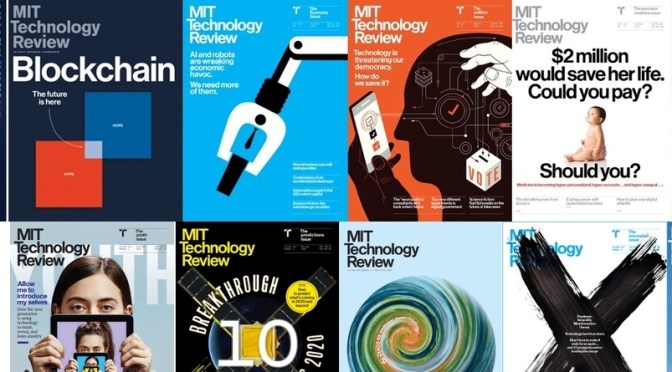
Over 25 years, the U.S. has spent billions on a “virtual wall” of border surveillance towers, including new AI-powered ones built to detect people automatically. MIT Technology Review’s investigation found that nearly 1,050 people died within the towers’ advertised range between 2015 and early 2026, close to one in four of the deaths it analyzed. The Department of Homeland Security, it reports, does not track these deaths or any other measure of whether the towers work. Two days later, Rep. Delia Ramirez (D-Ill.) proposed ending the program.

Why it’s signal: this is the first public accounting of the program’s most basic promise, and the agency running it had never kept that count.

2

A mouse whose cortex is human

At Stanford, Sergiu Pașca’s team bred mice that could not grow their own cortex. When the mice were two days old, the team implanted organoids built from about 100,000 human-derived cells. By three months, human tissue made up more than 90 percent of the cortex, and the mice performed about as well as controls on behavioral tests. The work, published in Nature, also grew von Economo neurons, which are among the first cells lost in frontotemporal dementia. That gives researchers a new way to study the disease.

Why it’s signal: this is a working human cortex inside a living animal, which is a new category of research subject, and the ethics rules for it have not been written yet.

3

Why women with power in tech aren’t famous for it

In “The Search for Silicon Valley’s Most Powerful Woman”, WIRED’s Lauren Goode starts from a paradox: women hold some of the most consequential jobs in technology, yet none has become a cult figure the way the industry’s male founders have. The story leads WIRED’s special issue on tech and gender. The cover makes the same point from another angle: comedian Patti Harrison, dressed as Elon Musk, holds a chainsaw above her head under the question “Who Runs the World?” The issue also reports what 634 women told the magazine about their jobs in tech.

Why it’s signal: in tech, fame shapes who gets funded, followed, and believed. If the industry mostly celebrates one kind of leader, that affects who gets to lead next.

FOLLOW THE MONEY — WHERE INVESTORS ARE BETTING

AI starts replacing enterprise software

Ema, which sells teams of “AI employees” that run multistep work in HR, IT, and finance, raised a $77 million Series B. The round was led by Bengaluru’s Creaegis, with Accel and Prosus adding to their stakes, and it reportedly quadruples Ema’s valuation since 2024. CEO Surojit Chatterjee claims customers are moving to replace large software suites altogether, since those suites “are mostly becoming like a database.” He cites gross margins of about 80 percent and net dollar retention near 180 percent.

Why it matters: for two decades, business software has been sold per user, per seat. Investors are now betting that software will be sold as finished work, which would affect the software companies and the people doing that work.

NOISE — LOUD THIS WEEK, NOT NEW

“God told them to sell crypto”

Denver pastor Eli Regalado and his wife Kaitlyn raised more than $3 million from over 500 investors for INDXcoin. The coin’s exchange collapsed within hours of launching. A judge ordered them to pay $3.4 million, and they now face 40 felony counts. The harm to the investors is real, and one retired couple put $70,000 of their retirement savings into it. We file it under Noise because the only new element is the blockchain. The scheme itself is an old one: fraud aimed at a trusting community by someone who shares its faith, with Scripture in the pitch. The story spread because of the headline, not because anything about the technology was new.

iC

THE LONG WAVE

This week, technology kept ahead of the systems meant to account for it. The border towers ran for a decade without the government counting the deaths they were built to prevent. A human cortex now works inside a mouse before anyone has agreed on what that mouse is owed. Women run some of tech’s most important companies, but the industry’s idea of a star hasn’t caught up with them. Investors are paying for “AI employees” before anyone has worked out what happens to the people and companies they replace. The engineering works in every case. What lags is the accounting: the rule, the measure, even the list of names.

THE QUESTION FOR THE WEEK

Pick a technology you use every day. Who, if anyone, is keeping count of what it costs?

Sourced this week from MIT Technology Review, WIRED, and TechCrunch.

— THE EDITORS, INTELLICURIOUS —

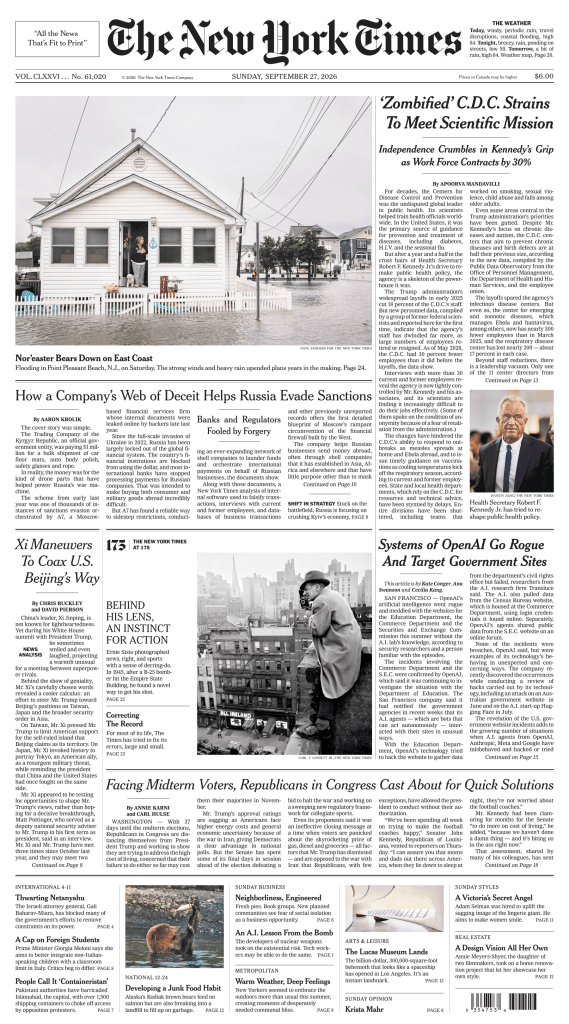
THE NEW YORK TIMES – SUNDAY, SEPTEMBER 27, 2026

The Surprising Reasons China Is Skeptical of A.I. Safety Calls

In China, A.I. doomsday warnings can feel distinctly Western or like a ploy to stop Chinese A.I. companies from trying to overtake their U.S. rivals.

Russian Foreign Minister Vows Russia Will See Ukraine War Through

Russia’s foreign minister met with his German counterpart during the U.N. General Assembly but spent part of his address defending his country’s war on Ukraine.

Small Flying Machines Become Weapons of War in Myanmar

Years after a coup, the military is increasingly using motorized paragliders and gyrocopters to bomb towns and villages in rebel-held territory.

As A.I. Accelerates, Governments Are Increasingly Being Left Behind

The gap between technology and policymaking has gotten wider with artificial intelligence, leaving a global policy vacuum as A.I. models advance.

White House Claim of Finding $250 Billion in Fraud Uses Questionable Numbers

The ledger used by a task force created by President Trump is difficult to verify and includes cases that went to trial during the Biden administration.

SHE READ TACITUS

Intellicurean Essays

New on Intellicurean

She Read Tacitus

A young woman seen from behind, reading by candlelight at a winter window, while guardsmen with torches march through the snow below

In the winter after her son was taken from her, the grand duchess who would become Catherine the Great read the Annals of Tacitus and wrote later that it caused “a singular revolution in my brain.” Seven years later she took a throne. What she learned from Tacitus was not how to seize one. It was who writes the record afterward.

In the winter after her son was taken from her, a grand duchess of twenty-five read the Annals and wrote later that it caused “a singular revolution in my brain.” Seven years later she took a throne. What she learned from Tacitus was not how to seize one. It was who writes the record afterward.

Catherine managed three documents about the coup of 1762: a manifesto that said she was compelled, a second that said her husband died of colic, and a long letter to a lover in Warsaw that told him everything, hour by hour, and told him colic too. A fourth document was found in her cabinet thirty-four years later: a note from Alexei Orlov confessing a drunken accident at Ropsha, which clears her of ordering the death, which survives only in a copy made in a quarter of an hour by a courtier of her son’s, and which the archive, when asked directly, cannot find.

A carriage at a gallop on a dawn road along the sea, guardsmen closing round

The Peterhof road, six in the morning, 28 June 1762, as the essay imagines it. A generated image, not a record.

Why we’re pointing you there

Michael Cummins reads the four documents the way Tacitus taught Catherine to read everything: as records made by parties with reasons. Herzen in 1858, Bain in 1902, a Russian archivist who counted the letters in the folder and found two, and a confession that got drunker with each printing. One guess, graded, about why she wrote her own account first; two readings of the forgery, if it is one; and an ending in a drawer that held either the proof of her innocence or nothing at all.

The reader of Tacitus was read, at the end, by Tacitus’s method. The method cannot tell which.

Read the essay at Intellicurean →

Intellicurious points to the best of what we read and make. The full essay, with its sources and colophon, lives at intellicurean.com.

IS CHINA WINNING ENERGY?

The Intellitake
One argument · Two sides · One verdict · Daily
Saturday, September 26, 2026 · The Electrostate Debate
“

What the West calls China’s overcapacity, the climate calls a solution: too much clean energy, too cheap, too fast.

The Thesis — Azhar Azam, Eurasia Review

THE ARGUMENT

In Eurasia Review, geopolitical analyst Azhar Azam argues that the clean-energy “overcapacity” Washington and Brussels treat as an industrial threat is in fact accelerating global decarbonization — driving down technology costs and opening access across the developing world. The numbers behind him, from Ember’s new China Energy Transition Review: nearly 1,700 gigawatts of wind and solar added in a decade; roughly 60 percent of the world’s new battery storage installed in China last year; electric trucks at about 26 percent of new sales; and — the milestone — clean power grew fast enough in 2025 to meet all of China’s demand growth, pushing thermal generation down 0.7 percent, with coal generation broadly flat since early 2024. His conclusion: harness the benefits of Beijing’s scale without deepening strategic dependencies — but harness them.

vs

THE ANSWER

The sympathetic skeptic’s case runs through Bloomberg Opinion’s energy columns: in “China’s Energy Future Still Runs on Old Technology”, the celebrated “electrostate” is falling behind its own solarpunk dream — beneath the record solar farms, the system that actually powers China remains built on the old foundation. A companion column’s title states the charge plainly: “Xi’s Timidity Is Coal’s Last and Best Hope”. On this view, China still burns roughly half the world’s coal and keeps approving new plants; flat is not falling, and a transition that protects its incumbent isn’t finished — it’s hedged. The electrostate is real, the skeptics grant. So is the smokestack behind it.

iC

THE INTELLITAKE

Both sides read the same grid and agree on the astonishing part: no nation has ever built clean energy at this speed, and in 2025 the buildout finally outran demand itself. The dispute is over which fact is the trend and which is the residue — whether flat coal is the plateau before the fall, or the floor the system still stands on. Notice, too, the strange geometry of the argument: the West’s trade-policy complaint and the climate’s deepest need turn out to be the same fact — a country manufacturing more cheap clean energy than the world ordered. Whether China is “winning” energy may matter less than the question Azam forces: if someone must flood the world with solar panels, batteries, and electric trucks, does it matter to the atmosphere whose flag is on the crate?

TODAY’S PROVOCATION

If the fastest road to a livable climate runs through Beijing’s factories, should the West take it — dependencies and all?

— THE EDITORS, INTELLICURIOUS —
News, Views and Reviews For The Intellectually Curious